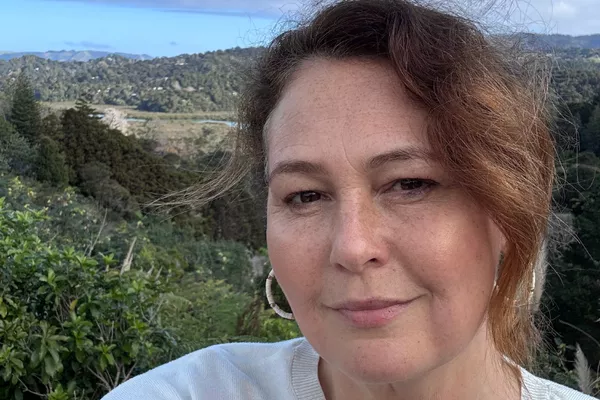
Jessica's story
10 Aug 2026
Neuro Sarcoidosis was a surprise diagnosis after a long time of treating my symptoms as perimenopause.
In my mid forties it’s not a big surprise we were focussing on perimenopause for all the weird, progressive and positively strange symptoms I was dealing with.
From dizziness, eyesight worsening, brain fog, language fading and general overwhelming fatigue. My GP was helping me with HRT and anything and everything to deal with the symptoms as they came along.
It was so slowly progressive I felt like a frog in a slowly boiling pot. Never suspecting anything more than peri-menopause. On reflection it was maybe two years I was ‘under a blanket’ where the symptoms were slowly robbing me of my motivation, purpose and energy. Dizziness, tinnitus, fatigue, loss of smell, blurry eyes and generally not feeling like myself.
I had symptoms but it was the two big events which eventually saw me in front of a neurologist. First I had weird eye thing - official unofficial term. I was driving and my eyes kept flicking side to side. And I couldn’t look down and see clearly. I saw an eye specialist who referred me to the emergency room for a CT scan. Nothing showed up. And it slowly cleared - not without spraining my ankle on a set stairs when I forgot to shut one eye and I couldn’t tell which was a stair and which was a duplicate.
A year later I experienced a Transient Global Amnesia episode. That was scary. I was out enjoying a day with family. Drove myself there and drove home half an hour each way. Got home, seeked out my husband and kept asking him where I’d been, who I’d been with and how I’d got home. Repeating the same questions. Scrolling through photos to remind myself. Husband quietly googling to see what he needed to do. At first it seemed I was only losing that day. But then more confusion came. Over the next couple hours I started to come back remembering more and more.
I put it down to a weird moment. But with encouragement from my husband we booked in to see my GP. She in turn referred me to a neurologist. I was still dealing with progressive dizziness, now to the point of throwing up. And had severe brain fog. But didn’t think I needed to be checked by a neurologist.
A few weeks later I, with my husband, was in the neurologist office trying to explain my amnesia. She then went on to check me over. She confirmed it was likely a one off transient amnesia episode. But here are referral letters for breathing training, MRIs and many other things.
Again I was slow to book anything and eventually booked in the MRI. Went along not expecting anything. It was a full brain and spine scan. The next day I get a call to go back for another brain scan, this time with contrast. The following morning I had a call from my neurologist telling me not to panic but her colleague in Auckland Hospital will be calling me and want to check me in for more tests.
A Monday at work meant this was a lot. I got the call and was very carefully asked to come to the A&E in Auckland Hospital that night. And in I went. I spent the next week in the hospital having all the tests and checks. I was ‘fine’ as I could be and didn’t enjoy being cooped up so had to sign myself out for a walk to the park. Me being ‘fine’ was also confusing the medical team. And they continually asked if I was dizzy. My scans showed a lot of inflammation on my brain. Thankfully not on my spine.
Eventually the neurological team were confident I had sarcoidosis rather than what it turns out they thought was brain cancer. They’d seen white granulomas on my lungs at the back of one of my MRI scans. At the time I didn’t know the cancer thing. They were elated. At least sarcoidosis could be managed. Even if I didn’t know what causes it or what management looks like.
I was given a prescription for what turned out to be a hefty dose of prednisone and instructions on when to take them. And a referral to a neurologist.
And back to life I went. I was still as bad as I had been - nothing had changed, yet. Apart from being scanned, xrayed , poked and prodded for a week. I went home for a hot bath and something easy to eat and promptly threw up on myself. Things weren’t ‘normal’.
I was in Queenstown with a group of girlfriends the next week when I picked up my prednisone prescription. It had taken a minute as they had to rule out TB as the cause. I started on what I now know was a HUGE amount and antibiotics to hit the granulomas.
What followed was a very strange ride. As the steroids hit I felt like I was jacked up in 6 coffees. I needed to burn energy through the day to make sure I could sleep. I started walking daily and doing yoga at home. I was manic. The blanket had lifted. The world was bright and available. I threw myself at cleaning the house. My boss agreed to working from home until the end of the year. The best thing. I was easily overwhelmed by light, noise and people.
The journey from there has been twisty and turns and definitely not smooth. But as the steroids did their job I was seeing my systems come back on line. And I moved out of survival and back into motivation, creativity and joy. I’m almost a year post diagnosis and feel so much better. But still feel there is more to come. I’m still coming off the steroids. They create their own thing. But feel lucky to have found out what was causing all of these weird symptoms. There are memory gaps over the last few years where I shouldn’t. And a huge journey to accept where I’m at. And I’m not running a race.
I am now still in the care of a neurologist with regular MRI reviews to check how the inflammation is going and if I need immunosuppressants. I’m trying to not need them. And come quietly off the steroids and go ‘into remission’. We will see what the next few months hold. I’m walking regularly, trying to reduce my stress and eating well. I’m also having the occasional wine, eating chocolate and making sure I notice the joy in life. After all that was what I was being robbed of.
This is a journey, not a destination. And Sarcoidosis will be with me for life. I just need to do my very best to manage it and live life.