Major political parties hear call from more than 10,000 New Zealanders for improved medicine access
24 Sep 2026
For Wellington mum-of-two, Amanda, medicines access isn’t a political issue. It’s a human issue. She is living with advanced triple negative breast cancer and wants New Zealand to fund medicines so she can live long enough to spend time with her family and continue the simple things like making lunchboxes and tucking her kids in to bed.
Amanda is one of more than 600,000 New Zealanders who need medicines but currently can’t access them.
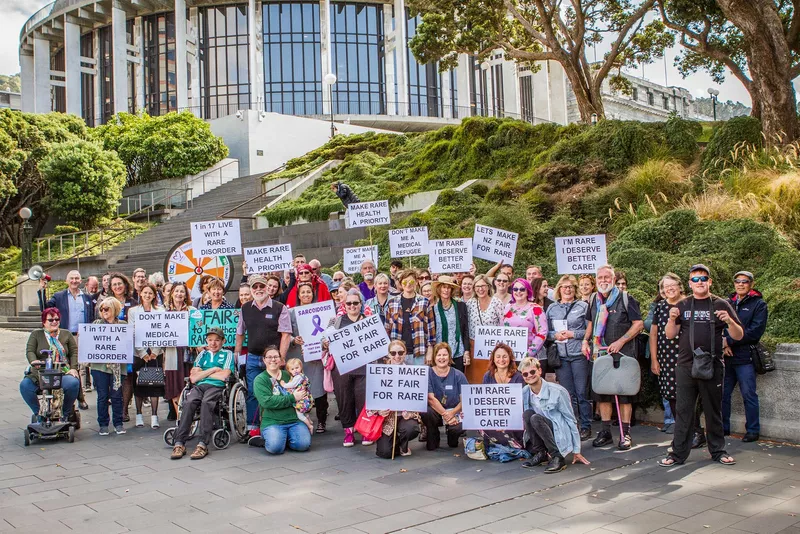
Today, six political leaders and party representatives gathered on the steps of Parliament to receive an open letter calling for public funding of these vital medicines. Presented by Amanda, and supported by 17 patient groups, the open letter calls on all parties for two clear commitments: fund the medicines New Zealanders need and put in place a long-term plan so New Zealand stops falling behind comparable countries in access to medicines.
ACT Leader David Seymour, New Zealand First Leader Winston Peters, Labour’s Dr Ayesha Verrall, Minister of Health Simeon Brown, Green Party MP Ricardo Menéndez March and The Opportunities Party candidate Jessica Hammond attended the presentation.
Amanda has previously shared the realities of needing medicines that aren’t funded.
“We're already faced with a huge burden of navigating treatment, making decisions, turning up to appointment after appointment. It's basically a full time job. It's deeply unfair to ask people going through that to worry about how they're going to pay for the medicines they need.
This isn't even about me. It's my children, my parents, my siblings, and everyone in my community. It’s feeling like your life has some value. You just want to live long enough to get old. It's kind of as simple – and as boring – as that.”
Politicians in attendance recognised that more needs to be done to improve access in New Zealand.
When asked about their policy position, party representatives discussed existing medicines investment, future funding, long-term health planning, prevention and earlier intervention. There was a clear sense that medicines access will remain an important issue as the election campaign progresses, with further policy detail and commitments expected from parties.
To date, only ACT has released their full medicines policy. ACT Leader David Seymour invited other parties to support their proposal to increase the proportion of the health budget spent on medicines by one percentage point each year.
“I've written to every other party and asked them to commit to that simple idea, 1% a year to 2033 to match Australia.”
The campaign welcomed the turnout and engagement, saying the challenge now is to turn political recognition of the issue into clear commitments.
Polling provides further evidence of public demand for action. 85% of people surveyed consider a long-term plan to improve medicines access very or critically important, while 82% say the same about funding the medicines Pharmac recommends. Around seven in ten say these commitments could influence how they vote, with support stretching across the political spectrum.
Campaign spokesperson Tim Edmonds said the message from the more than 10,000 New Zealanders who signed the open letter was simple.
“Act as though the lives of the New Zealanders you represent depend on it, because they do.”
For patients and families, the test will be whether political acknowledgement now translates into policies that will deliver timely access to the medicines they need.
For more information, visit www.forbiddenpharmacy.org