Winning essay puts patient experience at the heart of future care
27 May 2026
“Genomic results may clarify a diagnosis, but they can also exacerbate uncertainty, reveal incidental findings, or raise implications for whānau who didn't choose testing themselves. It begins with listening, and consent is not a single signature but an ongoing dialogue. Some patients choose to know, others choose uncertainty. Both decisions deserve equal respect,” - Yingxin Zhang.
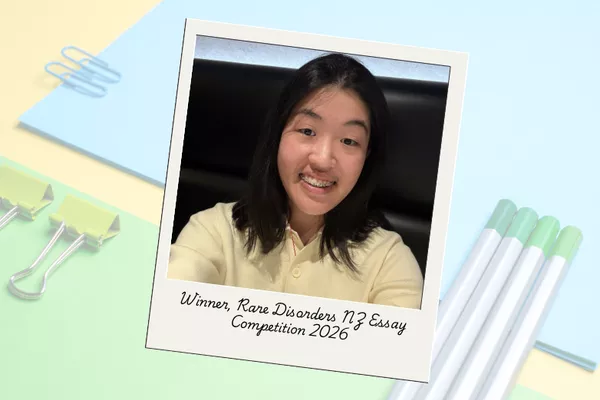
In Yingxin Zhang’s winning entry to our essay writing competition she imagines how the adoption of advanced technologies such as AI and whole genome sequencing, when coupled with a strong patient-centric approach, can improve healthcare services for people living with rare disorders.
We were impressed with Yingxin’s insightful reflections on the patient experience, and how she weaved in considerations of the patient’s perspective throughout her presentation of the benefits of adopting new technologies
“As healthcare professionals, our role is to steward these advances with care, ensuring genomic innovation is guided not by what technology permits, but by what patients need most.”
Yingxin is a 5th-year medical student at the University of Auckland. She is passionate about helping people during their most vulnerable moments, empowering them to live their lives fully.
Congratulations to Yingxin, and also to our runners up:
Tarun Nambiar, a 4th year medical student based in Waikato
Ellie Shimizu, a 4th year medical student at the University of Auckland
You can read their entries here:
Yingxin Zhang -More than a Diagnosis
Tarun Nambiar - The Nuances of Genomics in Rare Disorders
Ellie Shimizu - From Patient to Practitioner: A Future Doctor’s Perspective on Rare Disorder Genomics
Thank you to everyone who took part in this year’s essay writing competition.
This competition offers a valuable opportunity for health professional students to consider and reflect on addressing the unique challenges and needs of people living with rare disorders. We appreciate the time you took to participate.