RDRN News March 2026
 | Pānui March 2026 |
 |
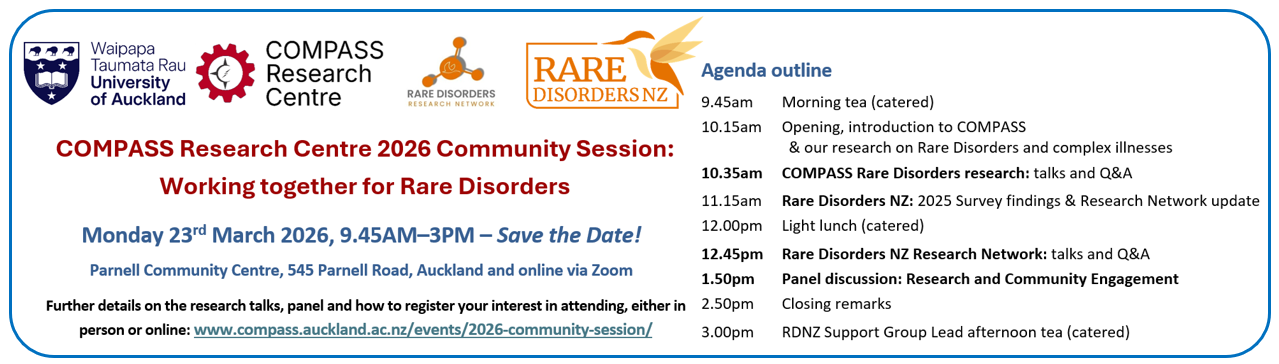
| RARE DISORDERS RESEARCH EVENT COMPASS Research Centre 2026 is hosting a Community Session on Working together for Rare Disorders. As a member of the rare disorders research network, you are invited to attend, either online or in person (though in person spots are limited). We’ll have talks from rare disorder researchers, hear updates from Rare Disorders NZ, and end with a panel discussion. When: Monday 23 March 2026, 9:45AM–3:00PM Where: Parnell Community Centre, Jubilee Building 545 Parnell Road, Auckland 1052 or online via Zoom Further details on the research talks, panel and how to register your interest in attending, either in person or online: www.compass.auckland.ac.nz/events/2026-community-session Register today to secure your spot! |
 |
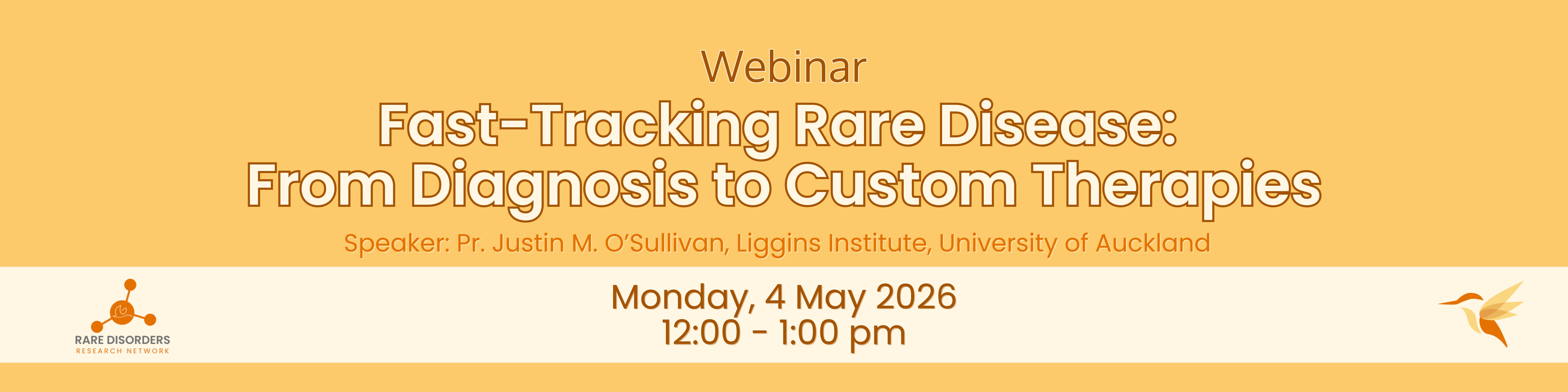
| WEBINAR: FAST-TRACKING RARE DISEASE: FROM DIAGNOSIS TO CUSTOM THERAPIES Join Professor Justin O’Sullivan (Liggins Institute, University of Auckland) as he shares his vision for a framework to support the progression from genomic diagnosis to truly individualized therapies for rare genetic conditions. The framework integrates phenotypic assessment, genomic and multi-omic evidence, and mechanistic understanding to inform key decisions, including therapeutic eligibility, modality selection, and clinical readiness. This framework aims to facilitate timely, safe clinical development of individualized therapies for rare disease. When: Monday 4 May 2026, 12:00PM – 1:00PM Place: Online. Please register for the webinar at this link and you will receive an invitation. |
 |
| PhD OPPORTUNITIES: FAST-TRACK RARE DISEASE: FROM DIAGNOSIS TO CUSTOM THERAPIES The Liggins Institute is recruiting three PhD students to help advance a new fast‑track framework that transforms rapid genetic diagnosis into timely, personalised therapies for children with rare disorders. The programme combines clinical and phenotypic assessment, genomic and multi‑omic data, and biological validation to accelerate treatment readiness. Candidates will need a strong background in AI (e.g., deep learning), biology, and a commitment to improving outcomes for children with rare conditions. The Liggins Institute offers a highly collaborative environment with a long track record of research that has shaped global clinical practice. Apply by 15 March 2026 by sending a CV and cover letter to justin.osullivan@auckland.ac.nz |
| NEW ZEALAND FIRST IN SOUTHERN HEMISPHERE TO HOST ERDERA NATIONAL MIRROR GROUP New Zealand has officially been recognised as the nineteenth National Mirror Group (NMG) within the European Rare Diseases Research Alliance (ERDERA), marking an important milestone in strengthening international collaboration across rare disease research and care. The group is chaired by Chris Higgins, with Professors Louise Bicknell and Phillip Wilcox as Co‑Chairs. Core membership of the NZ NMG includes all members of RDNZ’s Rare Disorders Research Leadership Group (RDRNLG), alongside members of the Catalyst-funded NMG/Australian collaboration project team. This recognition represents a significant step for the rare disorders sector in Aotearoa. It formally connects New Zealand researchers with international rare disease networks, provides a potential gateway to the Horizon Europe research programme, and supports alignment with global best practice in building research capability. The initiative will also help advance the research intentions outlined in New Zealand’s Rare Disorders Strategy. |
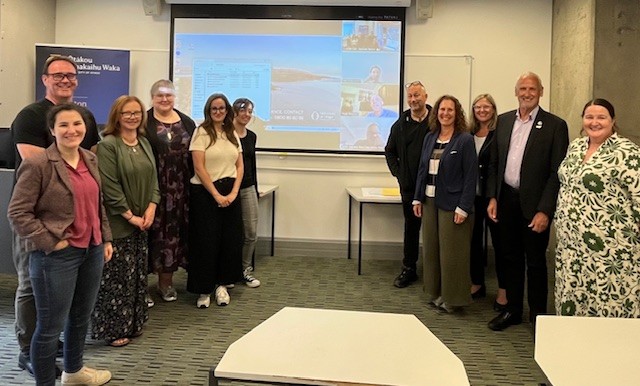 |
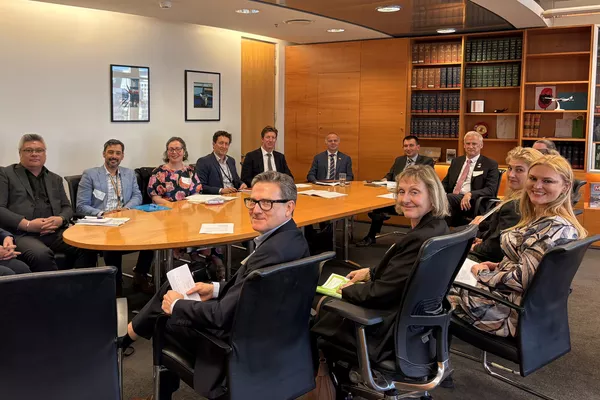
| NZ NATIONAL MIRROR GROUP MEETING 16 DECEMBER 2025 The meeting, hosted by Rare Disorders NZ and the University of Otago and held in Wellington, opened with presentations from ERDERA representatives Clément Moreau and Victoria Hedley. They outlined ERDERA’s mission as a major European partnership launched in 2024 to accelerate diagnosis, advance treatment development and expand understanding of rare diseases. With 185 organisations across 37 countries and a budget of €385 million, ERDERA supports research, clinical trial readiness, and key infrastructure including data, ethics, regulatory frameworks and training. Although New Zealand cannot lead ERDERA research calls, participation as specialist subcontractors provides a valuable opportunity to contribute expertise, influence future directions, and elevate the visibility of New Zealand’s rare disease community. NMGs function as national hubs that connect stakeholders together, assess national needs and align local priorities with ERDERA’s broader strategy. For New Zealand, this means connecting researchers, clinicians, policy agencies and patient organisations to international partners and supporting implementation of the NZ Rare Disorders Strategy. The meeting highlighted the importance of culturally grounded approaches, with Prof. Wilcox outlining Māori rights under Te Tiriti o Waitangi, including data sovereignty and tikanga‑based governance of samples. Māori-led genomic initiatives and international indigenous research partnerships were acknowledged as essential foundations for a culturally responsive NMG. The NZ Rare Disorders Strategy was also discussed, particularly its emphasis on improving diagnostic pathways, expanding research infrastructure, strengthening patient voice, and enabling clinical trial participation across the country. Many of these priorities closely align with ERDERA’s goals, presenting opportunities for shared progress. International perspectives were provided by Canadian (Dr Catherine Strandt) and Australian (Professors Gareth Baynam and Hugh Dawkins) NMG leaders, who emphasised the value of broad stakeholder engagement, coordinated research planning and the integration of rare disease frameworks across health, policy and community sectors. Australia’s experience demonstrated how family‑centred questions — around diagnosis, treatment access, care coordination and trusted information — can shape a comprehensive system that aligns clinical care, research and innovation. Both countries emphasised the importance of sustainable data systems, clear priority‑setting processes and cross‑sector partnerships. Across the day, participants discussed the need to involve a wide range of stakeholders, including clinicians, diagnostic laboratories, consumers, patients and whānau, primary care, social agencies, ethicists, policymakers, industry partners and Māori leadership. |
| ACTION PLAN FOR THE NZ NMG The NZ NMG is progressing a wide range of actions agreed at the December meeting, with several initiatives now underway to strengthen national coordination and align with ERDERA requirements. INTEGRATING NZ NMG WITH THE RDRNLG Work is progressing to formally integrate the NZ NMG with the RDNZ’s Rare Disorders Research leadership group (RDRNLG). This alignment is expected to strengthen national leadership across the rare disorders sector and ensure consistency with ERDERA‑aligned NMG requirements. The Terms of Reference will be updated as part of this process. A core NMG leadership group will be established, supported by additional working groups as needed. Phillip Wilcox has been asked to lead the development of a name for the group, selecting a Māori kupu (word) supported by an extended name that reflects the purpose and identity of the NMG. NATIONAL AND INTERNATIONAL MEETINGS The next online hui will be held on 1 April, 10:00am–12:00pm, continuing the December discussion on data. This is primarily for RDNZ’s Rare Disorders Research Leadership Group and members of the NZ NMG/Australian collaboration project team. Invitations will also be extended to representatives of the Ministry of Health | Manatū Hauora led Rare Disorders Strategy implementation group (Health New Zealand |Te Whatu Ora, Pharmac and HQSC). Further details will be communicated separately. In March, Chris will represent the NZ NMG at several ERDERA-related meetings in Sophia, Bulgaria, including the British Commonwealth NMGs Networking meeting, the National Alignment Board (NAB) meeting and the combined ERDERA NAB/International Rare Diseases Research Consortium meeting. Louise and/or Chris will attend an imminent Australian NMG meeting, with the date yet to be confirmed. Preparations are also progressing for the in‑person two‑day hui in Christchurch following the Human Genetics Society of Australasia (HGSA) meeting in August, with Louise liaising with HGSA organisers to reference the hui as a side event and circulate the speaker list to highlight areas of potential interest for the NZ NMG. Again, further details will be communicated separately. DEVELOPING THE NZ NMG THREE‑YEAR PLAN Development of the NMG’s three‑year plan is also underway. Chris will prepare an initial outline for discussion at the April hui, as part of fulfilling ERDERA’s requirements for national planning. Continued alignment with the Rare Disorders Strategy (RDS) is a priority, with deeper engagement planned with the RDS implementation group and recognition of Te Whatu Ora’s emerging clinical reference group to support coordinated national action. RIGHTSHOLDER AND STAKEHOLDER ENGAGEMENT Rightsholder and stakeholder engagement remains a central focus. The next step is identifying key individuals across the areas listed in December, including clinicians, laboratories, primary care, social agencies and Māori leadership. |
 | UPCOMING 16 March – British Commonwealth NMGs (UK, Australia, Canada and NZ) Networking 17 March – ERDERA NMG National Alignment Board (NAB) meeting 18 March – Combined NAB/International Rare Diseases Research Consortium meeting 23 March – Rare Disorders Research event in Auckland 1 April – NZ NMG online meeting (10:00am – 12:00pm) April – Australian NMG meeting (TBC) 4 May – Webinar: Fast-tracking rare disease: from diagnosis to custom therapies |