Cullen's story
3 Nov 2026
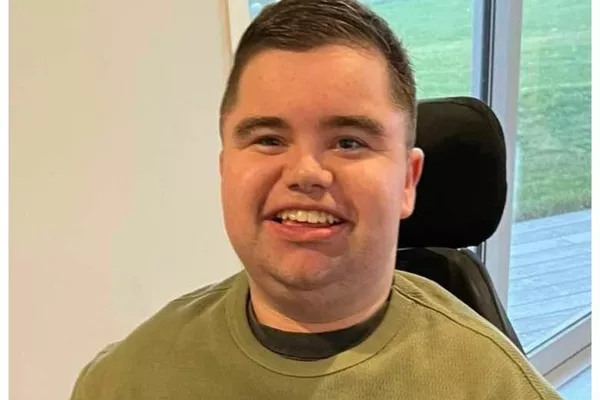
My name is Cullun Wallis I am a 23-year-old with Duchenne Muscular Dystrophy.
When I was eight years old, I was diagnosed with Duchenne Muscular Dystrophy (DMD), which is a progressive muscle wasting disease caused by a mutation in the dystrophin gene, resulting in no expression of the dystrophin protein, which acts as a muscular shock absorber.
I don’t know whether this stemmed from childish stubbornness, but I decided then I was going to be a person with DMD, not a patient. By that I mean that DMD wasn’t going to be what defined me, but rather being determined to overcome DMD in a disabling world was going to and is what defines me.
Most scientific literature relating to DMD starts with an introduction like: "The progression of DMD consists of a functional loss of all types of muscle over a relatively short period of time." At the age of 10-12 years, most people with DMD require an electric wheelchair for mobility and at around 20 years of age require non-invasive ventilation, initially at night and eventually 24/7. Respiratory and/or cardiac failure causes death between the ages of 20 and 40 years.
My goal is to change this introductory statement for Kiwis with DMD. I believe that I am in a unique situation to change this statement as I have a bachelor’s degree in molecular cell biology along with being a person with Duchenne muscular dystrophy.
This is because I experience the symptoms of Duchenne muscular dystrophy daily, which all stem from chronic systemic inflammation caused by the lack of the muscular shock absorber dystrophin and I have the knowledge of how the symptoms of Duchenne muscular dystrophy occur or how they might occur.
An example of my lived experience with Duchenne identifying potential research avenues Is the subject of my master’s degree research, which is Investigating the Bacteria of the Large Intestine of People with Duchenne Muscular Dystrophy and People with Becker Muscular Dystrophy. This was inspired because I experience gastrointestinal discomfort similar to IBD.
A significant increase and maintained investment in Pharmac spending would allow for the beneficial, life-saving treatments becoming available for DMD to save my life and others within the DMD community. I would like for my master’s research to be the start of my DMD research career not my legacy.
It is my hope that this research and future research I undertake inspire hope in people with Duchenne muscular dystrophy or Becker muscular dystrophy, and other neuromuscular conditions, and that I can contribute to a better quality and longer quantity of life for myself and others with Duchenne muscular dystrophy or Becker muscular dystrophy, and other neuromuscular conditions.
As a DMD researcher, I am currently facilitating relationships and collaborating with other DMD and neuromuscular disease researchers in New Zealand. As an advocate, I am starting to build a social media and online presence to raise awareness of DMD and educate people with 100% human-validated, science-backed facts about the issues that matter to DMD and the wider rare disease community in Aotearoa, New Zealand.
All of this is to ensure our voices are heard and our lives valued as much as those of everyone else in New Zealand, and that the DMD community can access the more beneficial, life-saving treatments becoming available. As a researcher and advocate, it is my desire to work alongside the government and the health sector to elicit better outcomes for people with Duchenne and the wider rare disease community.