Research event highlights value of community engagement
30 Mar 2026
Rare disorders research is central to advancements in rare disorders care and treatments, but it can often be challenging for researchers to connect with the people affected by the disorders they are researching, and likewise for those affected to find researchers interested in researching their condition.
Lived experience can add enormous value to research, particularly for rare disorders where information is scarce and experiences so unique.
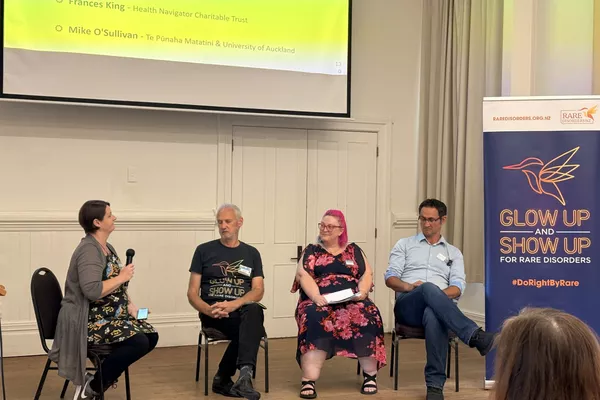
It was with this in mind that the the University of Auckland’s COMPASS Research Centre chose to focus their Community Session 2026 on Working together for Rare Disorders.
Rare disorders researchers, clinicians and rare disorder support group leads were brought together for a day of shared learnings and connection.
Presentations were held by University of Auckland researchers, by Rare Disorders NZ and rare disorder community members to share insights and lessons from research projects and the value of community engagement.
President of Ehlers Danlos Syndromes New Zealand, Kelly McQuinlan, summed up what many in the rare disorder community feel about research on their conditions when she said, “Nothing about us without us”.
There is so much that can be learnt from those living the disorders every day of their lives. They are experts in their disorder, often because they have to be. They connect and share experiences with others with the same disorder and know how to stay informed of developments. There is huge value for researchers in tapping into that knowledge.
There were also interesting examples presented of how researchers can connect with patients for research projects, such as Miriam Rodrigues, Neurogenetic Research Lead, who spoke of the benefits of patient registries and how she used Pūnaha (the NZ Neurogenetic Registry & Biobank) to identify and recruit participants for a world first trial.
Likewise, rare disorders researchers benefit from connecting with one another to share knowledge, find areas of collaboration and avoid duplication. Rare Disorders NZ’s Chief Executive Chris Higgins presented on establishing New Zealand’s first rare disorders research network and about the network’s most recent connection to the European Rare Diseases Research Alliance as a National Mirror Group.
Connection, collaboration and cooperation were echoed throughout the day as central to successful outcomes for research in rare disorders.