Ryan O'Rourke
Ryan O'Rourke
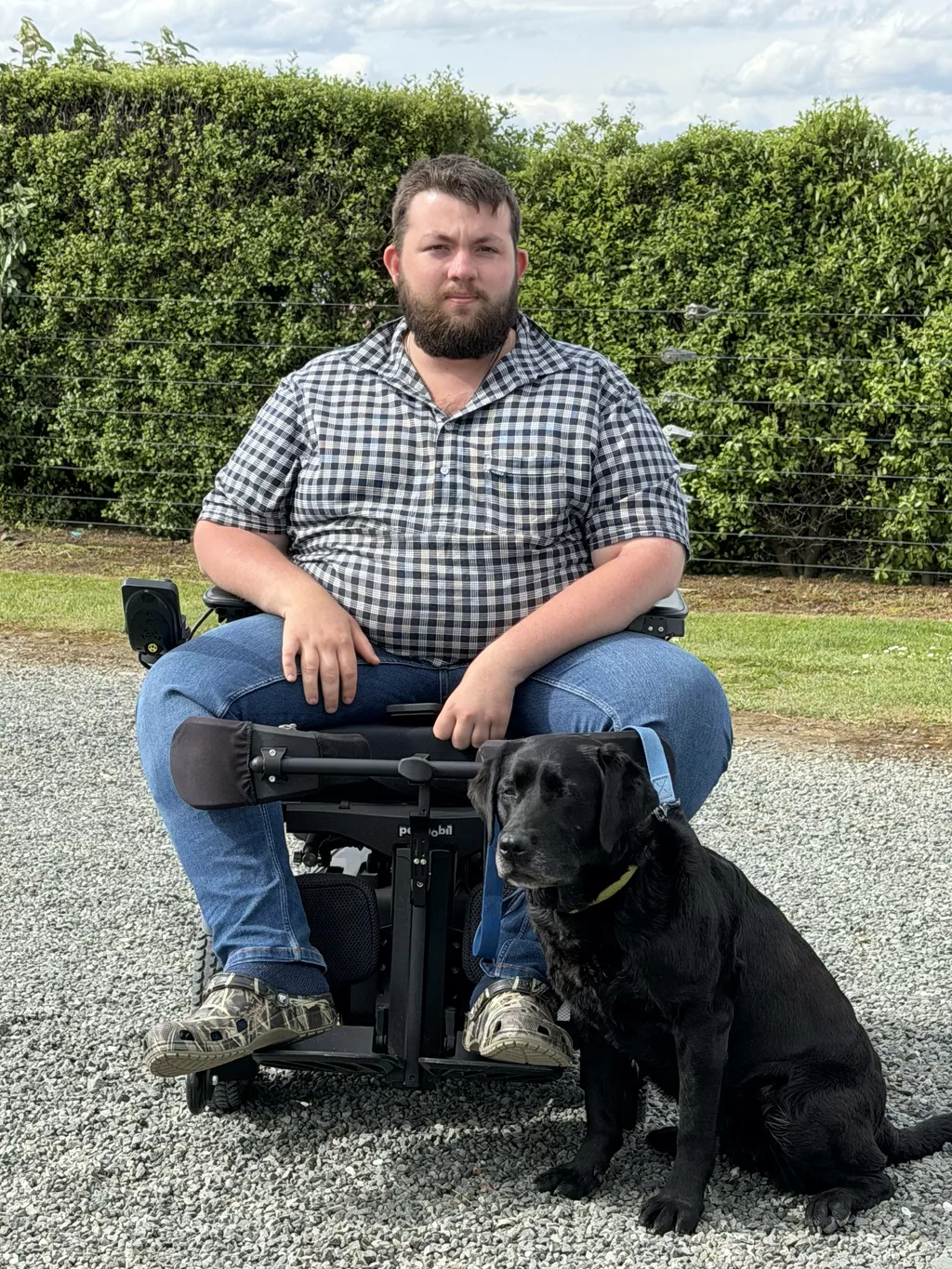
I live with spinal muscular atrophy type 3, a genetic condition that causes the motor neurons controlling my muscles to progressively break down. It’s a condition I’ll have for life, and without treatment it gradually takes more away. I was able to walk until around the age of 14, and while I’m lucky the decline was gradual, the weakness is relentless, and I’m now a full-time electric wheelchair user.
Day to day this affects me greatly. I have a caregiver, and my morning routine of showering and getting dressed used to take half an hour. It now takes an hour and a half. I can no longer dress independently, and I struggle to get in and out of bed every day. My arm strength has declined, and I can no longer lift my arms above my shoulders. It’s also the small things most people never think about: reaching a shelf, opening a heavy door, picking something up off the floor, washing my hair, even lifting a glass or a mug.
What people often don’t realise is that SMA Type 3 doesn’t touch my mind or my life expectancy. My thinking is completely unaffected, and I expect a normal lifespan. So this isn’t about a short life; it’s about a long one in which my physical independence is steadily eroded by a condition we now have treatments for. Every loss of function is permanent, and every time I lose something more, it hits like a ton of bricks mentally.
Holding onto my current abilities would mean the world to me, and most importantly, it would allow me to remain a largely independent person.
Spinraza and Risdiplam are the only disease-modifying treatments for my condition. They increase the survival motor neuron (SMN) protein my body can’t make enough of, and are proven to slow and in many cases halt the progression of SMA. For me, this isn’t about a miracle cure or walking again. It’s about protecting the strength and independence I still have.
I work as an intermediate accountant and am studying towards my Chartered Accountancy, and in the next five years I’d like to have completed my CA and be on my way to a senior role. To do that, I need to keep my hand strength to type and use a computer. Living rurally, driving is both my independence and my only way to get to work. I’m also afraid of losing my ability to cook for myself, and of no longer being able to get out and about with my friends.
Every ability I retain allows me to keep working, driving, and contributing to my community, while requiring less support from others. Losing function doesn’t just affect me personally; it increases my reliance on caregivers and health services over time.
Unlike many conditions where treatment can begin later with similar outcomes, SMA progression cannot be reversed. Once strength is lost, it is gone permanently, so every month I go without treatment is potentially function I never get back. The medicine is the difference between stability and permanent decline.
What makes this so hard to accept is that both medicines are already funded in New Zealand, for children. A child diagnosed with the exact same condition I have receives funded treatment. I don’t, purely because of my age when funding arrived. The same drug, the same disease, the same need, but adults like me have been left behind.
When funded treatment began in January 2023, the criteria only covered people aged 18 and under. I had turned 19 the previous winter, around six months too old, and so I missed out, not for any clinical reason, but because of where a line happened to fall on a calendar.
I found out while I was at university, alone in my room. It made me feel incredibly lost, like there would never be any hope of getting treatment, and at the time I didn’t properly tell anyone how I felt. Knowing a treatment exists but remains inaccessible because of an age cutoff has been one of the hardest parts of living with SMA, and it has taken an ongoing toll on me, including depression I still struggle with from time to time.
Since turning 19, the biggest thing I have lost is the ability to dress myself. That is strength a treatment might have helped me keep, and I’ll never get it back. I’ve considered moving to Australia to try to access treatment, and recently looked into compassionate access through the company that makes Risdiplam, but the cost is simply out of reach.
There is now an active PHARMAC application to fund these medicines for people with SMA type II and III aged 19 and over, which is exactly the group I’m in. It has progressed through assessment and ranking, but it still isn’t funded, and there’s no guarantee of when. Meanwhile, the clock keeps running for all of us in the adult community.
We’re asking for the same chance that’s already given to children with our condition: the chance to protect our independence before more of it is gone for good.