Scott Boyle
Scott Boyle
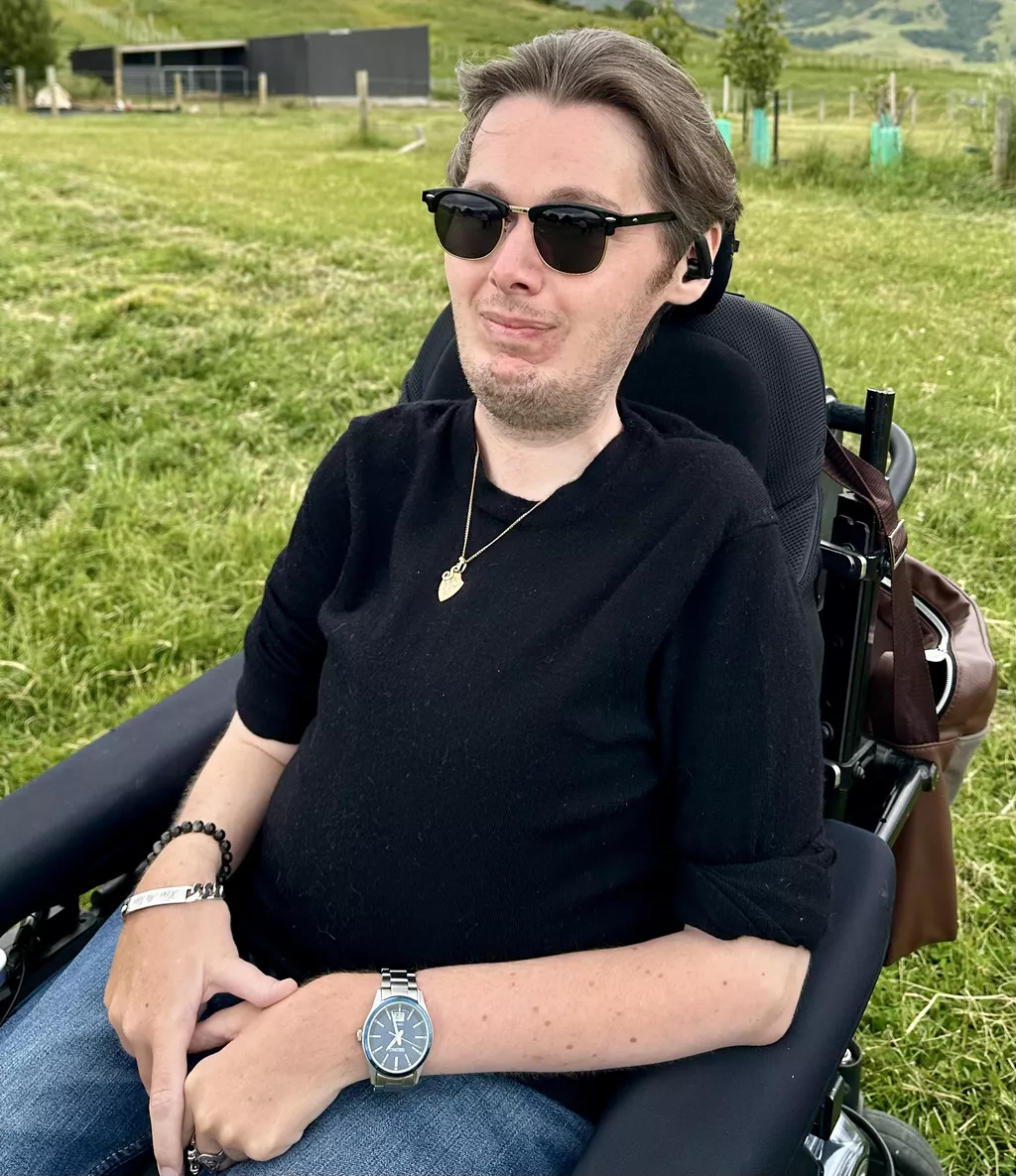
My name is Scott Boyle, and I am a 31yo living with Spinal Muscular Atrophy - Type 2. I’ve spent most of my adult life trying to avoid the reality of my condition, ignoring the deterioration of my strength, my reach, and my ability to maintain my own dignity.
When you live with a degenerative condition such as this it isn’t always dramatic or immediately noticeable with what you lose. The loss of function is subtle and can creep up on you in the most frustrating and embarrassing ways.
I currently dedicate significant time to governance, advocacy, and representing disabled New Zealanders in discussions with government agencies, service providers, and community organisations. Preserving my health is not only about my personal wellbeing. It is also about ensuring that people with lived experience can continue contributing their expertise and leadership to New Zealand’s disability sector.
When I was younger, I had the energy and strength to socialise daily, could pursue my passions, and had the drive to persevere past my own physical limitations. But alas, those days are gone. Over the last year I’ve felt my body struggle with regular engagements in my role as a DPO Representative. Tasks that once took seconds now require planning, assistance, or are no longer possible. Reaching a shelf, repositioning myself in bed, lifting a drink, opening a container, or typing for extended periods all require significantly more effort than they once did.
SMA is not simply a condition that affects mobility. It affects independence, employment, relationships, participation in community life, and ultimately how much of your own life remains under your control.
The value of treatments such as this is complex. As a rational and practical man, I understand the fiscal weight of such treatments and the cost it takes to provide it. But then as a person living with it, I can only imagine how much different my life would be if I treatment when it first became available.
For adults living with SMA, treatment is not about regaining a normal life. It is about preserving the life we still have. No adult with our condition is under the impression it will miraculously cure us or undo the decades of deterioration. But it would make us healthier. It would give us more freedom. And most importantly it would give us time. The average of lifespan of somebody with SMA2 is 60 years. Which means I’m currently bracing for a midlife crisis! But what if treatment could give us more time?
As a leader in the Neuromuscular & Disability Community in New Zealand I actively fight for our people to not just be able to live their lives but thrive. I engage with government and organisations, ministers and citizens, disabled and non-disabled. Today that type of representation and the ability to speak out is more important than it ever has been. But it is a struggle. Every day I force myself to perform even the most basic of tasks. Typing emails, attending 3hr Zoom meetings, or meeting with other peers for coffee. When I get up in the morning, I shower and get dressed, brush my teeth, and have my breakfast. And by the end of those 2hrs I am exhausted. Where most would be rejuvenated and alert, I am ready for a break.
It is impossible to quantify just how much the treatment would change my life going forward. Mostly because every person, their body, and their deterioration, is different. No two cases are the same. But what I do know is that without treatment I will die early.
That reality has always impacted my personal relationships and willingness to have a family of my own. I would love nothing more than to have a child with my partner and build the family that we dream about. Yet my condition will always mean I require extra care. My deterioration will always be a burden. And my shorter lifespan would be a trauma I dare not impose upon my family.
From 2021 -2024 I had been diagnosed with gallstones. A routine concern for those without physical disabilities! Due to my condition, I was deemed a high risk for respiratory failure and mortality. For 3 years I had to endure the constant agony of gallstone attacks, infections, sepsis, and the gruelling toll such misery can take on my mental health. My body was considered too weak for surgical intervention, and the recovery was a gamble.
In 2023 we explored the possibility of accessing Spinraza to attempt to help strengthen, or at the very least support, my body and the trauma imposed upon it. However, we were denied. In December that year I had decided it was too much and demanded that the surgical team put me on the wait list and take the risk of removing the gallbladder. March 25th it was finally removed without incident, and my recovery was swift. Three years of misery and pain that could have been avoided.
But while I did recover from that experience, the toll it took on my body led to loss of major function and independence. Had treatment been available, it may have improved my overall strength and resilience, potentially reducing some of the concerns clinicians held regarding surgical risk, avoiding years of agony and suffering, and preserved a lot of the function I lost. Would it have prevented the gallstones? Of course not. But it would have given me a chance to fight and thrive.
Even now I can feel the effects of the experience. People often imagine disability as major life events, but the reality is that SMA takes away independence one small task at a time. Imagine needing someone to press a button and start your electric toothbrush because you can’t apply the pressure while also holding the brush at the same time? Or having to then spit into a cup because even with a modified bathroom you can’t afford to get the sink setup properly to lean forward while having your arm positioned on the side? There are a thousand minor challenges and struggles in daily life that may seem trivial, and for most we can find solutions or call for aid. But what if we didn’t have to? What if we could simply have more independence and control over our bodies and lives?
The absence of treatment is not simply the absence of medicine. It is the ongoing loss of independence, health, and opportunity. Every year without access means further deterioration that cannot be reversed. For adults with SMA, the question is not whether treatment will cure us. The question is whether we are given the same opportunity as others to preserve our health, maintain our dignity, and continue participating in the lives and communities we value.
To deny vital and proven treatments for a generation based on ‘minimal gains’ sends a very clear message. “Your life is not as valuable.”